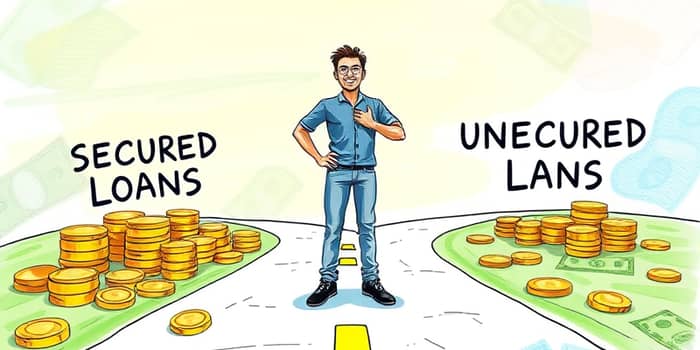
Establishing a stable financial future often begins with making informed borrowing decisions. By choosing the right loan products and managing them wisely, you can turn debt into an opportunity for growth.
In this comprehensive guide, we will explore the nuances of loan types, compare secured and unsecured options, and provide practical steps to integrate borrowing into a robust financial plan.
Understanding Secured and Unsecured Loans
Before diving into specific products, it’s essential to grasp the difference between secured and unsecured loans. Secured loans require collateral—an asset pledged to guarantee repayment—while unsecured loans rely solely on your creditworthiness.
Choosing a secured loan can help you protect your assets from loss if you default, but it also exposes your collateral to risk. Unsecured loans, conversely, offer freedom from pledging property, yet they demand a stronger credit profile.
Exploring Common Loan Types
Different loans serve distinct purposes. Whether you’re consolidating debt or purchasing a home, understanding each category helps you diversify your financial toolkit.
- Personal Loans: Unsecured, fixed monthly payments, terms up to 84 months.
- Debt Consolidation Loans: consolidate multiple debts efficiently into one payment at a lower rate.
- Balance Transfer Loans: Transfer high-interest balances onto a new loan with reduced APR.
- Auto and Home Loans: Secured by collateral, available in fixed or variable rates.
- Buy Now, Pay Later: Short-term installment plans, popular for everyday purchases.
Comparing Fixed-Rate and Variable-Rate Options
Interest structure plays a critical role in affordability. Fixed-rate loans lock in your rate and payments, offering predictability, while variable-rate products can offer lower initial APR but introduce future uncertainty.
If budgeting stability is your priority, a fixed-rate mortgage or personal loan can keep you on track. For those with strong repayment discipline and patience, a variable-rate loan might yield savings—but be mindful of market fluctuations.
Avoiding Risky Loan Pitfalls
Not all borrowing opportunities are created equal. Some products carry exorbitant fees or predatory terms that can trap you in cycles of debt.
- Payday Loans: Triple-digit APRs and fees that compound rapidly.
- Pawnshop Loans: High rates plus risk of losing personal property.
- Excessive Buy Now, Pay Later Plans: Can lead to overspending if not monitored.
Steering clear of these options helps you preserve your credit score health and maintain control over your finances.
Applying for a Loan: Key Requirements
The application process demands preparation. Lenders assess your credit history, income, and overall financial health, so gathering documentation beforehand saves time and stress.
- Recent tax returns and bank statements.
- Proof of income and employment verification.
- Debt-to-income calculations and credit reports.
- extensive documentation and verification requirements for nonprofit or business loans.
Meeting these criteria enhances approval odds and secures more favorable terms.
Integrating Loans into Your Financial Plan
Borrowing responsibly means weaving loans into a broader strategy of budgeting, saving, and investing. A well-rounded plan might include:
- Building an emergency fund equivalent to three to six months’ expenses.
- Prioritizing high-interest debt payoff using debt consolidation or balance transfers.
- Maintaining appropriate insurance coverage to balance stability and flexibility against unforeseen events.
Regularly reviewing loan performance and adjusting payment schedules can help you lower rates than credit cards and achieve long-term goals.
Real-World Examples and Next Steps
Consider a borrower with $15,000 in credit card debt at 20% APR. By securing a debt consolidation loan at 10% APR, they not only save on interest but also gain a single monthly payment structure that simplifies tracking.
On the home front, first-time buyers often leverage FHA loans with low down payments. Pairing this with a solid credit score improvement plan can unlock better rates and flexible terms up to 84 months on subsequent personal loans.
By choosing the right products, meeting application requirements, and aligning borrowing with your financial blueprint, you can transform debt into a stepping stone toward lasting prosperity.
References
- https://www.truist.com/money-mindset/principles/outsmarting-debt/secured-vs-unsecured-loans
- https://www.key.com/personal/loans-lines/personal-loans-lines.html
- https://www.associatedbank.com/education/articles/personal-finance/loans-and-debt/what-loan-is-right
- https://www.lendingclub.com/resource-center/personal-loan/common-types-of-loans-and-benefits-of-each
- https://www.uschamber.com/co/run/finance/loan-types-for-nonprofit-businesses
- https://www.consumerfinance.gov/owning-a-home/explore/understand-the-different-kinds-of-loans-available/
- https://www.fibt.com/livefirst/insights/crafting-a-strong-financial-foundation-8-essential-steps/
- https://www.credible.com/personal-loan
- https://info.bankofamerica.com/en/consumer/community-banking/banking-solutions
- https://www.nerdwallet.com/personal-loans/learn/personal-loan-types
- https://fastercapital.com/topics/what-are-the-different-types-of-financial-foundations-and-how-do-they-work.html/1
- https://www.bankrate.com/loans/personal-loans/types-of-personal-loans/
- https://www.finfit.com/introducing-financial-foundations/
- https://www.onemainfinancial.com/resources/loan-basics/different-types-of-personal-loans
- https://www.experian.com/blogs/ask-experian/how-to-compare-loan-offers/