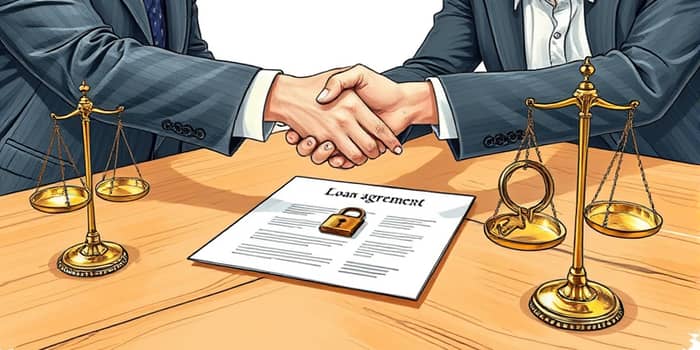
At the heart of every successful financial partnership is a meticulously crafted loan agreement that serves as both shield and guide. When parties understand their rights and responsibilities, they can move forward with confidence to pursue growth, innovation, or stability. A loan agreement not only safeguard their financial interests but also builds the foundation for trust and mutual respect.
Understanding the Foundation
A loan agreement is a formal contract between a lender and a borrower, defining the principal amount, the interest rate, and repayment schedule. By establishing this legal enforceability and protection, it ensures there is a clear recourse if obligations are not met. The document outlines each party's role, minimizing misunderstandings and fostering a transparent relationship.
Such clarity empowers borrowers to plan their finances and gives lenders confidence that their capital is managed responsibly. Whether you are launching a new venture or securing financing for personal needs, understanding this foundation is the first step towards a secure financial future.
Core Elements of Every Loan Agreement
A comprehensive loan agreement must include several key components that address legal, financial, and operational aspects:
- Party Identification: Full names and addresses of both lender and borrower
- Agreement Date: Clearly stated date at the top and near signatures
- Loan Amount: Principal sum, type of credit facility, and currency
- Interest Rate: Fixed or variable rate, calculation method, and schedule
- Repayment Terms: Frequency, amount, and prepayment options
- Default Provisions: Definition of default and lender’s remedies
Documenting these elements with precision establishes precise terms and clear expectations for both parties. It sets the tone for a professional and enforceable contract.
Securing the Agreement
When greater security is needed, lenders often require collateral. A security agreement specifically defines the collateral asset, outlines perfection procedures, and protects the lender's interest. Collateral must be described with sufficient detail, such as serial numbers or legal property descriptions.
In addition, the borrower makes representations and warranties that underpin the transaction. These promises typically cover the borrower’s existence, authority to enter the agreement, accuracy of financial statements, solvency, and absence of litigation. An entire agreement clause ensures that all terms are contained within a single document, preventing future disputes over undocumented promises.
Loan Covenants: Guardrails for Borrowers
Covenants are commitments that guide borrower behavior and protect the lender’s investment. They are divided into affirmative and negative categories, providing a balanced approach to risk mitigation:
- Affirmative Covenants: Obligations the borrower must fulfill, such as delivering periodic financial statements, maintaining insurance coverage, and notifying the lender of material events.
- Negative Covenants: Restrictions on certain actions, including taking on additional debt, selling key assets, or paying dividends beyond specified limits.
By adhering to these guardrails, borrowers demonstrate their commitment to financial discipline and establish a track record of reliability.
Conditions and Compliance
A loan agreement often includes conditions precedent that must be satisfied before disbursing funds. These conditions may involve third-party approvals, appraisals, insurance requirements, and confirmation that no default exists. Once the conditions are met, funds are released with confidence that all criteria align with the lender’s risk parameters.
Ongoing reporting requirements allow lenders to monitor the borrower’s financial health. Regular updates on collateral valuation, performance metrics, and changes in operations ensure that both parties stay informed. A governing law clause designates which state’s statutes apply, while signature and notarization sections confirm the document’s validity and execution.
Key Principles for a Robust Agreement
A strong loan agreement reflects three core principles that underpin successful lending:
- Risk Mitigation: Covenants and collateral reduce exposure to default and loss.
- Alignment of Interests: Shared goals encourage prudent financial management.
- Flexibility and Adaptability: Tailored terms accommodate unique borrower circumstances.
By integrating these principles, lenders strike a balance between protecting their investment and providing borrowers with room to grow and innovate. This balanced approach fosters long-term partnerships based on trust and mutual benefit.
Variations by Loan Type
Loan agreements come in different forms, each suited to specific needs:
Choosing the right type ensures that the agreement aligns with the borrower’s goals and the lender’s risk tolerance.
Distinguishing from Similar Instruments
It is important to distinguish traditional loan agreements from alternative instruments like SAFEs (Simple Agreements for Future Equity). While SAFEs are used by startups to secure potential future equity, they do not accrue interest or impose a maturity date. In contrast, standard loan agreements are debt instruments with explicit repayment obligations, interest charges, and legal remedies in case of default.
Understanding these differences helps parties select the right vehicle for funding, ensuring that expectations around repayment, ownership, and risk are fully aligned from the outset.
Conclusion
Building a safe loan agreement requires attention to every detail, from the identification of parties to the execution of signatures. By combining clear definitions, robust covenants, and thoughtful conditions precedent, lenders and borrowers can embark on financial collaborations with confidence.
Whether you are drafting a simple promissory note or a multi-faceted commercial loan, remember that the strength of your agreement lies in transparency, mutual respect, and a shared commitment to success. Embrace these pillars, and you will foster partnerships that stand the test of time.
References
- https://visible.vc/blog/simple-agreement-for-future-equity/
- https://www.legalzoom.com/articles/10-things-you-need-to-have-in-your-loan-agreement
- https://www.epgdlaw.com/what-are-safe-agreements/
- https://www.fredlaw.com/alert-demystifying-the-loan-agreement-a-guide-for-lenders
- https://www.aiologic.io/why-strong-loan-covenants-are-vital/
- https://corporatefinanceinstitute.com/resources/commercial-lending/loan-agreement/
- https://www.cakeequity.com/guides/safe-notes
- https://www.contracthero.com/en/blog/loan-agreement
- https://carta.com/learn/startups/fundraising/convertible-securities/safes/
- https://www.bankrate.com/loans/personal-loans/personal-loan-agreement-advice/
- https://www.qapita.com/blog/beginners-guide-to-simple-agreement-for-future-equity-safe
- https://advance.lexis.com/open/document/openwebdocview/Loan-Agreement-Key-Elements/?pdmfid=1518425&pddocfullpath=%2Fshared%2Fdocument%2Fanalytical-materials-lpa-ca%2Furn%3AcontentItem%3A5W2B-BMP1-JX8W-M1G2-00000-00&pdcomponentid=402959
- https://defence-industry-space.ec.europa.eu/eu-defence-industry/safe-security-action-europe_en
- https://www.sirion.ai/library/contracts/lending-contract/
- https://www.ycombinator.com/documents
- https://www.osler.com/en/insights/updates/how-to-prepare-for-the-financing-of-your-company/